Percussion Solo
Mridangam · Khanjira · Konnakol
Adi talam
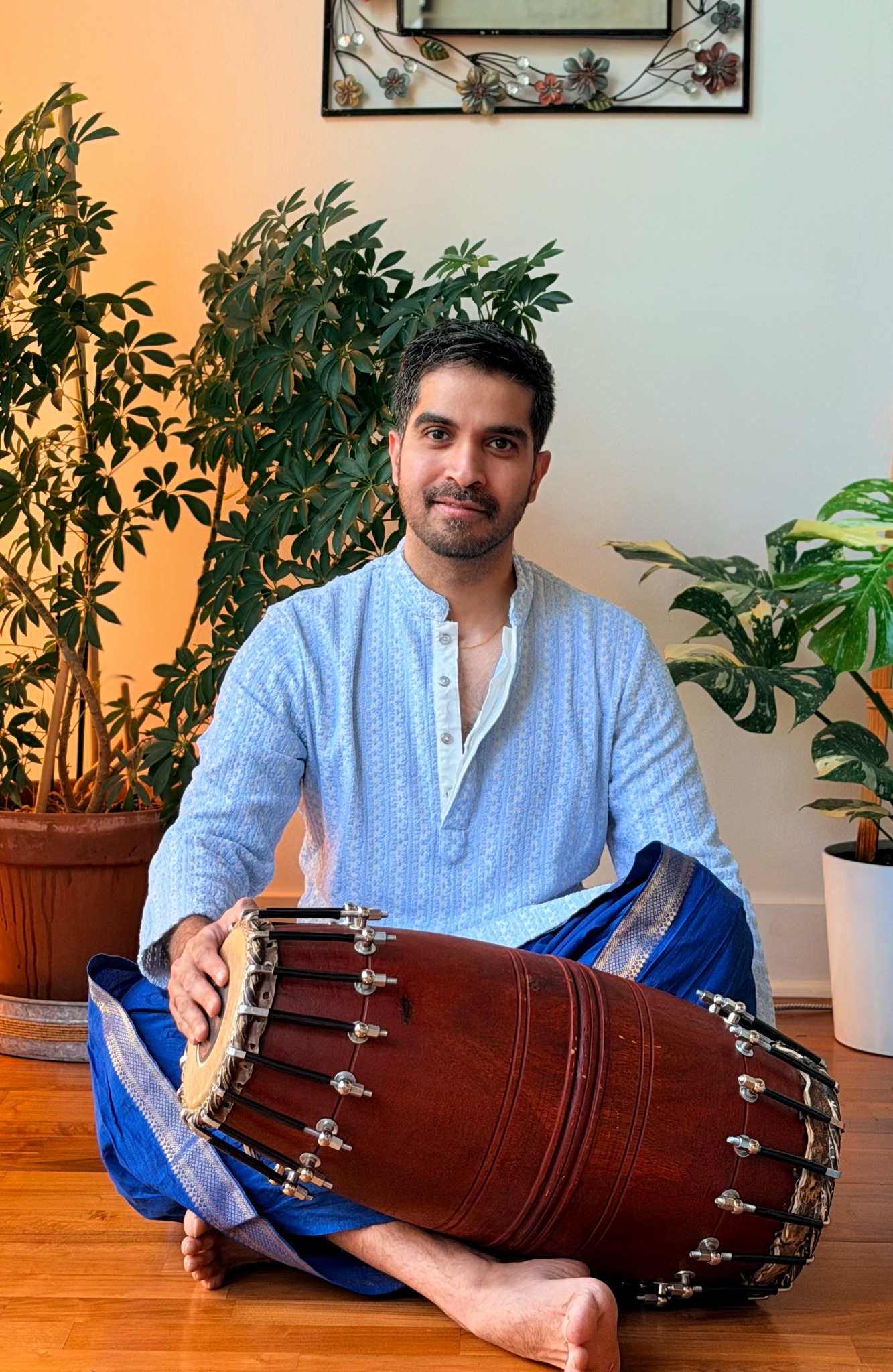
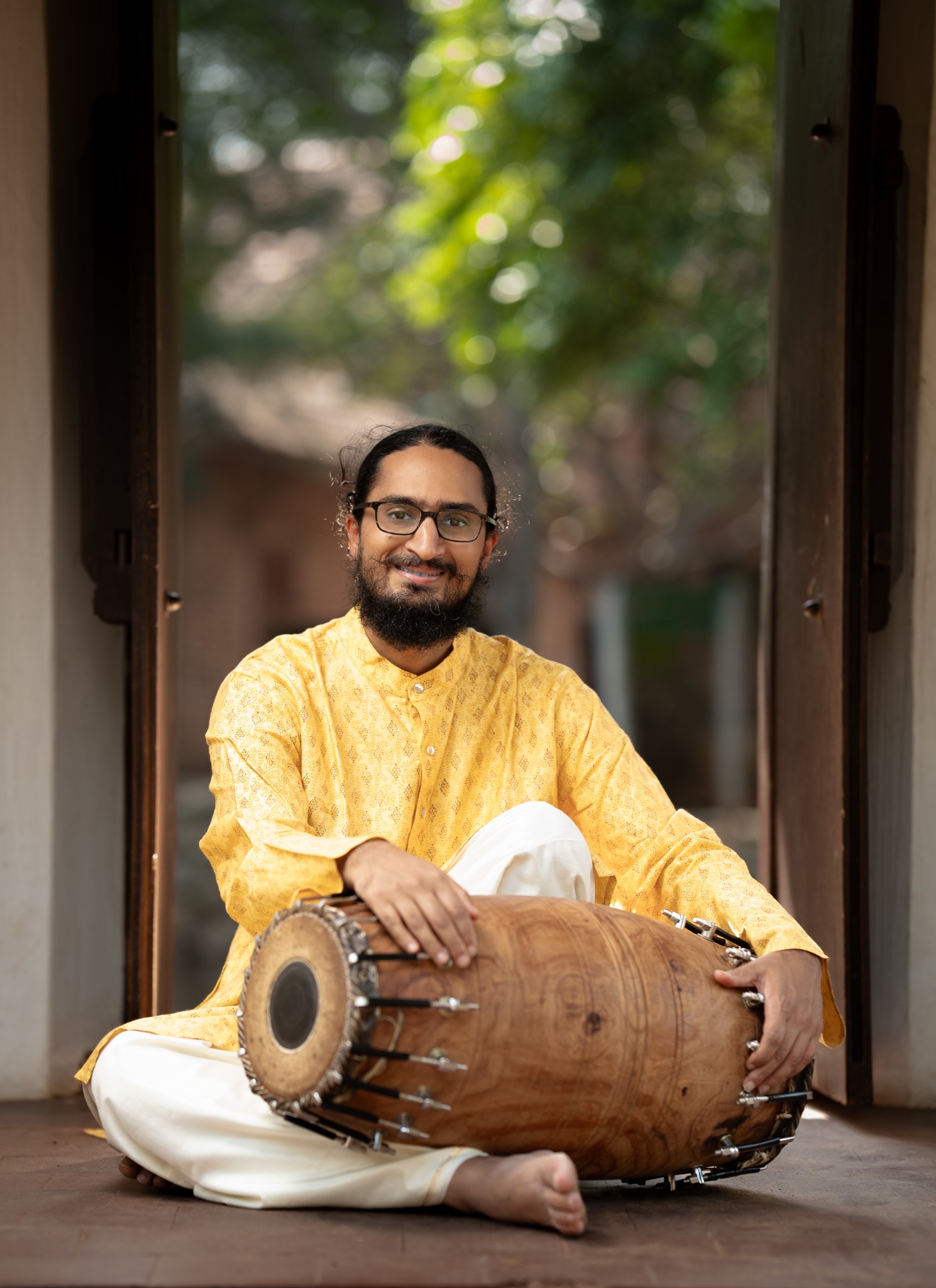
Varun explores the repertoire of the Pudukottai school, popularized by Palani Subramania Pillai and carried forward through Guruvayur Dorai to Dr. Rohan Krishnamurthy. The solo brings together mridangam, khanjira, and konnakol, the art of spoken rhythmic syllables.
The Pudukottai school draws on the rhythmic richness of tavil playing in temple and nadaswaram music. Manpundia Pillai (1859–1922) helped shape this tradition and developed the khanjira into a Carnatic concert instrument. Palani Subramania Pillai (1908–1962) carried it forward, combining intricate rhythmic development with expressive bass inflections (gumkis) and sensitive accompaniment.
Yasmin Nrityati
Bharatanatyam
Ragamalika · Chatusra Eka in four nadais · Bilvamangala’s Krishna Karnamrutham
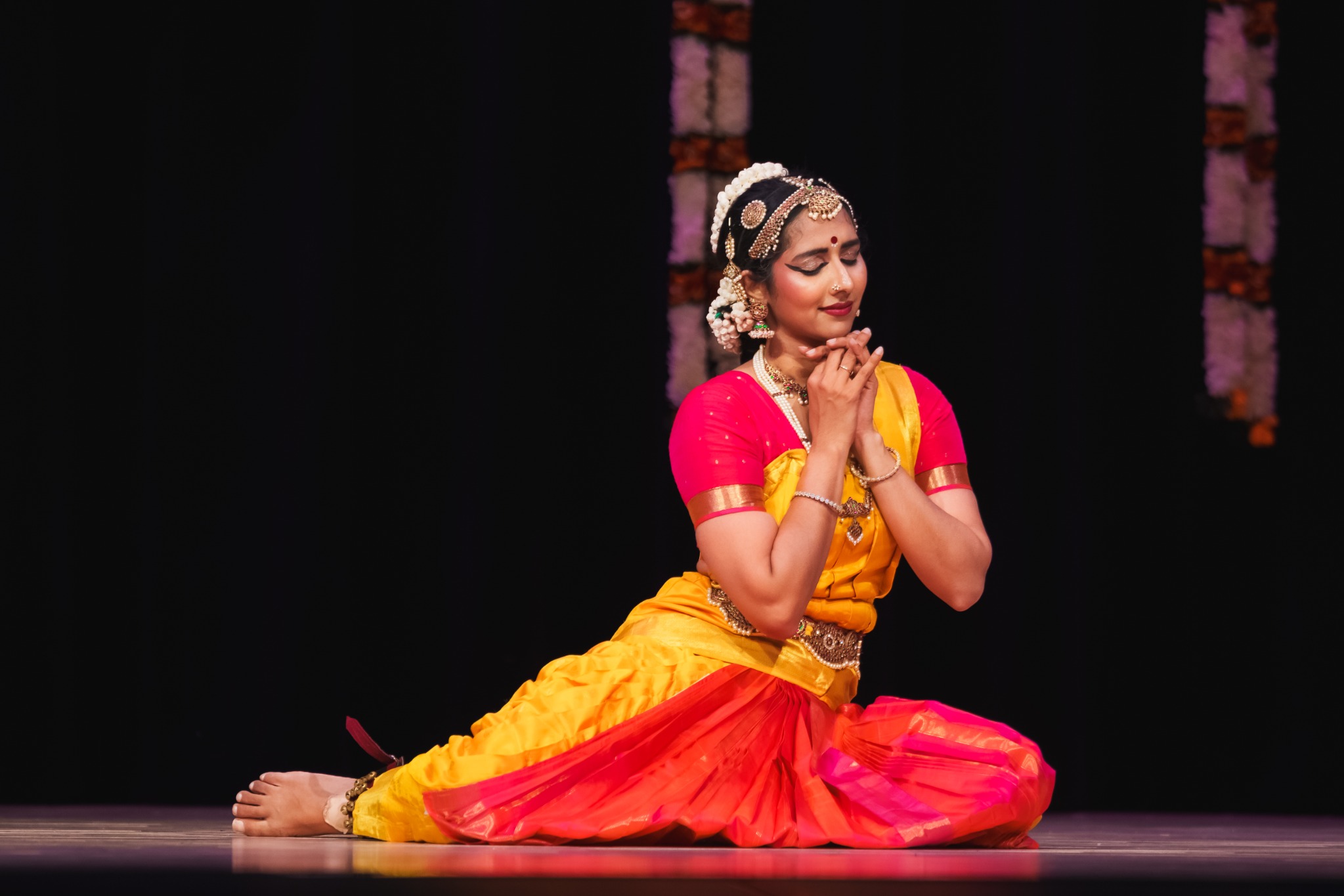
Nitya depicts Krishna’s beauty and the movement it inspires in the creatures around him. Muruga’s peacock, Shiva’s Nandi, and Indra’s elephant each respond to his enchanting presence.
The verse comes from Krishna Karnamrutham, a Sanskrit devotional work dating back at least to the 15th century, by Bilvamangala, also known as Lilasuka. According to legend, his beloved Chintamani urged him to redirect his intense attachment to her toward Krishna. This transformation finds expression in poetry filled with Krishna’s beauty, playful presence, and the devotee’s longing for him.
Evarura Ninnu Vina
Carnatic vocal
Mohanam · Misra Chapu · Tyagaraja
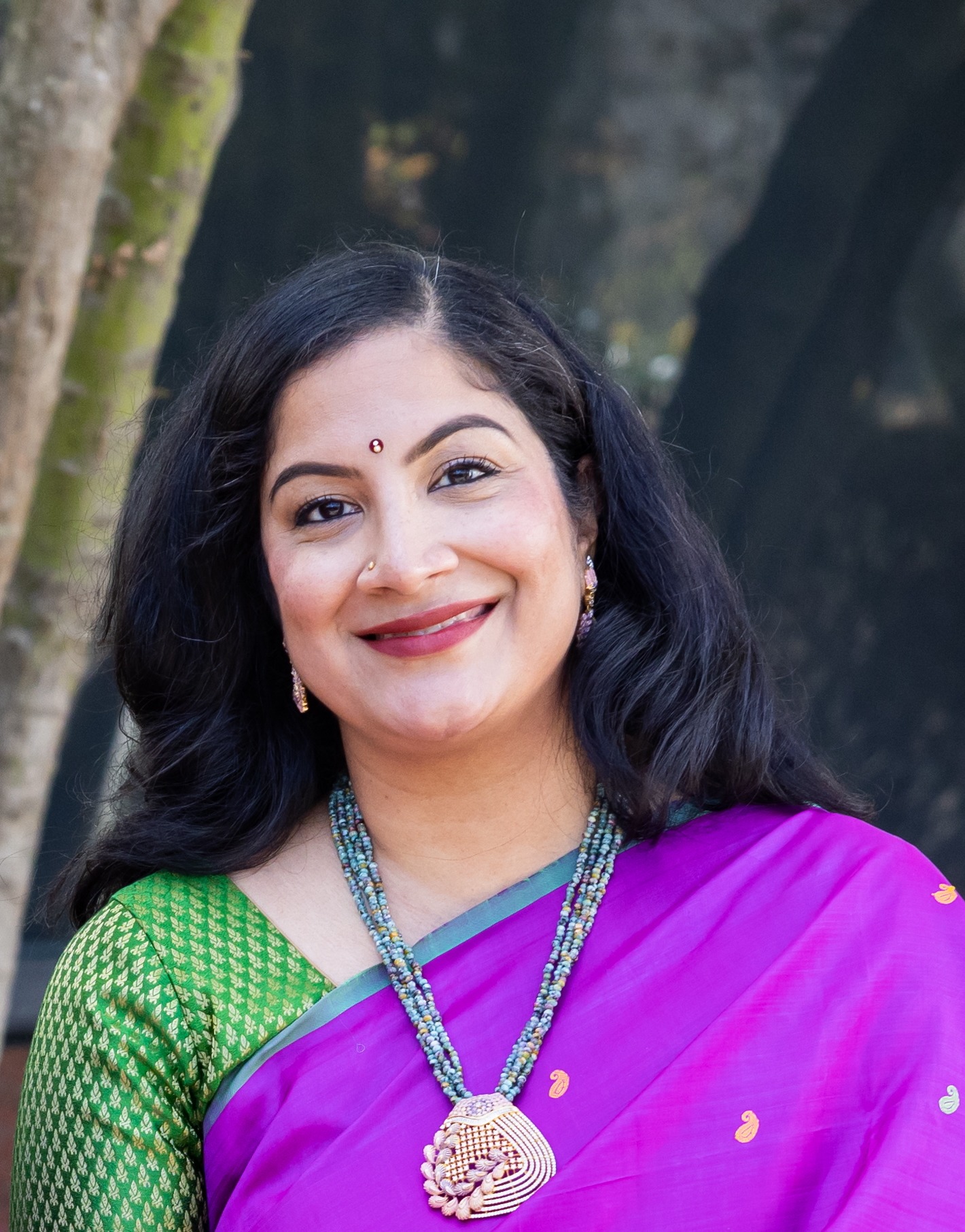
“Who but you is our refuge?” asks Tyagaraja in this appeal to Rama. Sindhu’s rendition explores Mohanam through alapana, melodic improvisation without a fixed beat; niraval, variations on a lyric line; and kalpana swaram, improvised solfège. The composition begins two counts into the seven-unit Misra Chapu cycle, giving its phrases an offset relationship to the rhythmic pulse.
One of Carnatic music’s three foundational composer-musicians, Tyagaraja (1767–1847) left more than 700 surviving compositions, mostly in Telugu. Devotion to Rama runs through much of his work, alongside reflections on music, spiritual life, and human conduct. His celebrated Pancharatna Kritis, or “five gems,” are sung together at his annual commemorative festival. His output also includes songs for group devotional singing and two musical dramas, Prahlada Bhakti Vijayam and Nauka Charitam. Few Carnatic concerts feel complete without his compositions.
Vishamakara Kannan
Bharatanatyam
Senjurutti · Chatusra Eka · Oottukkadu Venkata Kavi
This song delights in Krishna’s mischievous antics. Nitya develops one episode in particular: Krishna asks the girl next door to sing Mukhari, a raga associated with sorrow. When she says she does not know it, he pinches her until she cries, then announces, “That’s Mukhari!”
Oottukkadu Venkata Kavi, generally dated to around 1700–1765, combined vivid devotional storytelling with melodic and rhythmic invention. His celebrated Krishna songs, including Alaipayuthey and Thaaye Yashoda, convey affection, wonder, and humor. His wider repertoire encompasses many deities, musical forms, and sophisticated rhythmic structures.
Thillana
Carnatic vocal
Senjurutti · Adi · Veena Seshanna
Lively rhythmic syllables and flowing melodic phrases bring the program to a spirited close in Veena Seshanna’s Senjurutti thillana.
Veena Seshanna (1852–1926) was a distinguished musician at the Mysore court and a leading figure in the Mysore veena tradition. This thillana reflects his connection to royal patronage: its lyrical passage addresses King Sri Krishnarajendra, praising his virtues and appealing for compassion.